As we approach the midpoint of the 2020s, August 2025 stands as a remarkable juncture in human history—a month that will serve as both dress rehearsal and preview for the emerging energies defining our new era. Across technological, environmental, geopolitical, and cultural spheres, this period crystallizes transitions that have been building for years, offering a concentrated glimpse into the forces that will shape the remainder of the decade and beyond.
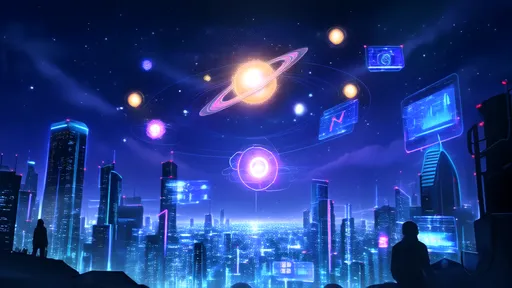
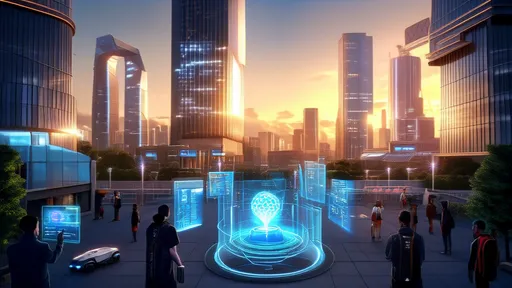
The technological landscape in August 2025 is expected to showcase unprecedented integration of artificial intelligence into daily life. We are moving beyond the novelty of AI assistants and into an age of predictive environmental management, where smart cities begin to demonstrate their full potential. These urban centers will not merely react to problems but anticipate them, managing traffic flows in real-time, optimizing energy distribution based on predictive consumption patterns, and even preempting maintenance needs for critical infrastructure. This represents a fundamental shift from responsive systems to anticipatory ones, changing how we conceptualize our relationship with the built environment.
Simultaneously, the climate conversation evolves from theoretical debates to tangible adaptation strategies. The summer of 2025 is projected to feature another wave of extreme weather events, pushing communities worldwide to implement innovative resilience measures. Coastal cities will showcase newly completed sea walls and floating infrastructure, while agricultural regions demonstrate genetically adapted crops capable of withstanding previously unsustainable temperatures. These developments represent humanity's collective acknowledgment that climate change is not a future threat but a present reality requiring immediate and creative solutions.
Geopolitically, August 2025 finds the world navigating a complex recalibration of power dynamics. The transition toward multipolarity accelerates as emerging economies solidify regional influence through new trade alliances and technological partnerships. This period reveals the declining effectiveness of traditional diplomatic approaches, forcing nations to develop more nuanced strategies for international engagement. We witness the emergence of what analysts term "fluid sovereignty," where national interests are increasingly pursued through flexible coalitions rather than rigid bilateral relationships.
The cultural sphere during this period reflects a society grappling with rapid transformation. August 2025 becomes a showcase for artistic expressions that blend physical and digital realities, with major exhibitions featuring augmented reality installations that respond to viewers' emotions and movements. This represents more than technological novelty—it signals a fundamental rethinking of artistic creation and consumption in an age where the boundaries between real and virtual experiences continue to blur. The cultural products emerging during this period serve as both commentary on and catalyst for our evolving relationship with technology.
Economic systems undergo significant stress testing during this timeframe as well. The transition toward circular economic models gains substantial momentum, with major corporations implementing truly closed-loop production systems that eliminate waste entirely. Meanwhile, decentralized finance platforms begin handling significant portions of global remittances and microtransactions, challenging traditional banking institutions to adapt or become obsolete. This economic transformation represents not merely incremental change but a fundamental reimagining of value creation and exchange in the digital age.
Healthcare in August 2025 demonstrates remarkable advances in personalized medicine, with genetic therapies becoming increasingly accessible and AI-driven diagnostics achieving unprecedented accuracy. The most significant development, however, may be the cultural shift toward preventative and predictive healthcare. Wearable technology evolves from fitness tracking to continuous health monitoring, with systems capable of detecting potential medical issues weeks or even months before symptoms appear. This represents a profound transformation in our relationship with our own bodies and the healthcare establishment.
Educational paradigms continue their dramatic evolution during this period. The traditional model of front-loaded education (learning primarily in youth) gives way to continuous skill development throughout one's lifespan. Micro-credentialing and personalized learning paths become mainstream, enabled by AI tutors that adapt to individual learning styles and paces. This shift reflects the recognition that in an era of rapid technological change, the ability to learn and adapt becomes more valuable than any specific knowledge acquired at a fixed point in time.
The workplace transformation accelerates dramatically during this period as well. Hybrid models become sophisticated ecosystems rather than simple compromises between office and remote work. Advanced collaboration technologies create seamless integration between physical and digital workspaces, while AI handles routine administrative tasks, allowing human workers to focus on creative and strategic activities. This represents not merely a change in where we work but a fundamental redefinition of what work means in an increasingly automated world.
Social structures undergo significant reconfiguration during this timeframe. Traditional community boundaries continue to blur as digital connections enable meaningful relationships across geographical and cultural divides. At the same time, we see a resurgence of hyper-local community engagement, with neighborhoods developing stronger self-sufficiency networks for food production, energy generation, and mutual support. This simultaneous globalization and localization of social connections represents a complex new social architecture that challenges traditional notions of community.
As August 2025 unfolds, it becomes increasingly clear that we are witnessing not isolated developments but interconnected manifestations of a broader civilizational shift. The technological, environmental, geopolitical, and cultural changes reinforce one another, creating feedback loops that accelerate transformation across all sectors of society. This period serves as both demonstration and catalyst—showing us where we are headed while simultaneously pushing us further in that direction.
The significance of August 2025 lies not in any single event or breakthrough but in the convergence of multiple transformative trends. It represents a moment when abstract concepts about the future become tangible realities, when theoretical models become practical implementations, and when speculative fiction becomes observable fact. This month offers a concentrated preview of the emerging era—a dress rehearsal for the profound changes that will define the coming decades.
Looking beyond August 2025, we can anticipate that the energies demonstrated during this period will continue to intensify and interconnect. The preview we witness in this remarkable month establishes patterns and trajectories that will shape human experience for generations to come. It provides both warning and promise—showing us the challenges we must overcome and the extraordinary possibilities we might achieve as we navigate this transitional era in human history.

By /Sep 5, 2025

By /Sep 5, 2025
By /Sep 5, 2025

By /Sep 5, 2025

By /Sep 5, 2025
By /Sep 5, 2025

By /Sep 5, 2025

By /Sep 5, 2025

By /Sep 5, 2025
By /Sep 5, 2025

By /Sep 5, 2025
By /Sep 5, 2025
By /Sep 5, 2025

By /Sep 5, 2025

By /Sep 5, 2025
By /Sep 5, 2025

By /Sep 5, 2025
By /Sep 5, 2025
By /Sep 5, 2025

By /Sep 5, 2025
