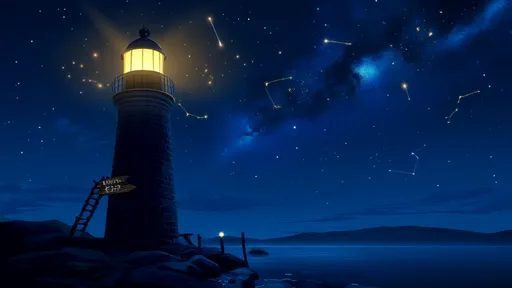
As the warm embrace of August settles upon us, the night sky unveils a celestial spectacle that has captivated humanity for millennia. This month, the cosmos offers a particularly brilliant display, with one star standing out as the undisputed monarch of the midnight hour. For those who find solace in gazing upward, this period promises a guiding light, a celestial companion that seems to shine just for you.
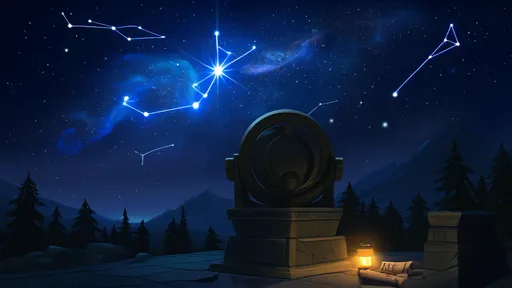
The title for the most prominent celestial beacon of August undoubtedly goes to Arcturus. This orange giant, the brightest star in the constellation Boötes, commands attention high in the southwestern sky after dusk. Its name, derived from the Ancient Greek for "Guardian of the Bear," hints at its historical role as a celestial marker. Arcturus doesn't just shine; it dominates. Its distinct reddish-orange hue is unmistakable, a warm fire against the cool, dark velvet of space. To find it, one can simply follow the arc of the Big Dipper's handle—"arc to Arcturus" as the old stargazer's saying goes. This star feels personal, as if its light, which left on its journey over 36 years ago, has been traveling all this time just to illuminate your window sill tonight.
But Arcturus is not alone in its glory. It shares the stage with the grand tapestry of the Summer Triangle, an asterism formed by three of the brightest stars from three different constellations: Vega in Lyra, Altair in Aquila, and Deneb in Cygnus. This triangle is virtually overhead during the late evenings, a massive, unmistakable formation that serves as a gateway to the Milky Way. On a clear, dark night, away from the intrusive glow of city lights, the faint band of our galaxy seems to flow directly through it, a river of starlight connecting the heavens to the earthly observer. Peering into this region with even a modest pair of binoculars reveals a breathtaking density of stars, star clusters, and nebulous clouds—a humbling reminder of our place in a vast cosmos.
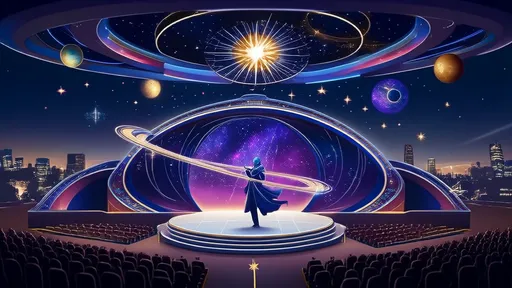
This month also presents a superb opportunity to witness the graceful dance of the planets. In the pre-dawn hours, a brilliant Venus hangs low in the eastern sky, a dazzling morning star that outshines all other planetary and stellar objects. Not far behind, though much fainter, Mars makes its appearance, a rusty speck slowly climbing away from the sun's glare. Meanwhile, the ringed wonder, Saturn, rises in the east after sunset, reaching a position high in the south by midnight. Through a telescope, its magnificent rings are tilted in a way that offers a spectacular view, a sight that never fails to inspire awe. Later in the night, Jupiter follows, its cloud bands and four Galilean moons waiting to be discovered by any curious onlooker.
Beyond the planets and bright stars, August is famously known for the Perseid meteor shower. While its peak is predicted for the nights of August 11th through the 13th, increased meteor activity can be seen for weeks. These "shooting stars" are actually tiny particles, often no larger than a grain of sand, from the comet Swift-Tuttle, burning up in Earth's atmosphere. The best viewing occurs after midnight from a dark location. Lying back and letting your eyes adjust to the darkness, you might be rewarded with dozens of meteors per hour, each one a fleeting streak of light—a silent, cosmic fireworks display.
So, which star will light up your windowsill this August? The answer is not singular. It is the collective grandeur of the season. It is the steady, warm glow of Arcturus greeting you at dusk. It is the sharp, blue-white intensity of Vega directly overhead at midnight. It is the silent, swift dash of a Perseid meteor making a wish come true. It is the patient, majestic orbit of Saturn, reminding you of the clockwork precision of the universe. This August, the sky is not just a sight to behold; it is an experience to be felt. It invites you to step outside, to look up, and to reconnect with the timeless wonder that has inspired poets, scientists, and dreamers throughout history. The show is free, and your front row seat is waiting.
By /Sep 5, 2025

By /Sep 5, 2025
By /Sep 5, 2025
By /Sep 5, 2025

By /Sep 5, 2025

By /Sep 5, 2025
By /Sep 5, 2025
By /Sep 5, 2025
By /Sep 5, 2025
By /Sep 5, 2025
By /Sep 5, 2025

By /Sep 5, 2025
By /Sep 5, 2025
By /Sep 5, 2025

By /Sep 5, 2025

By /Sep 5, 2025

By /Sep 5, 2025
By /Sep 5, 2025
By /Sep 5, 2025

By /Sep 5, 2025
