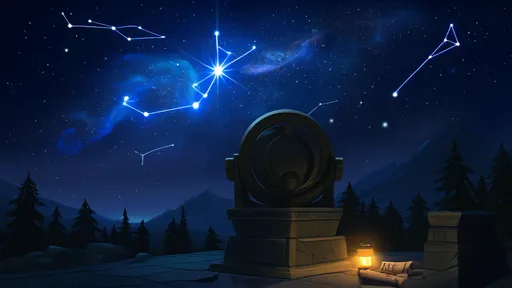
As the warmth of August settles upon the Northern Hemisphere, the night sky unveils a tapestry of celestial wonders that have captivated humanity for millennia. The stars of this month whisper secrets older than civilization itself, tales written in constellations that have guided, inspired, and mystified cultures across the ages. From the dazzling arc of the Milky Way to the regal presence of Leo and the watery depths of Aquarius, the August heavens are not merely a spectacle but a chronicle of cosmic lore waiting to be deciphered.
Among the most prominent features of the August sky is the constellation Leo, the Lion, which dominates the western horizon during the early evenings. In ancient Mesopotamia, Leo was associated with the fierce heat of summer, and its appearance heralded the arrival of the Nile's floodwaters in Egyptian mythology, symbolizing both destruction and renewal. The star Regulus, the heart of the lion, was considered a royal star by the Persians and Babylonians, believed to hold sway over the fortunes of kings and empires. To the Greeks, Leo represented the Nemean Lion slain by Hercules, a testament to strength and triumph over adversity. These layered myths remind us that the stars were once seen as divine actors in human drama, their movements intricately tied to the rhythms of life on Earth.
Meanwhile, high overhead, the constellation Cygnus, the Swan, soars along the Milky Way. To the ancient Greeks, Cygnus was often linked to the story of Zeus, who transformed himself into a swan to seduce Leda, resulting in the birth of Helen of Troy—a tale of love, deception, and the inextricable weave of fate. In Chinese astronomy, Cygnus forms part of the "Celestial Ford," a bridge of stars that symbolized the annual reunion of two lover deities separated by the Milky Way. This narrative echoes in various cultures, underscoring a universal human longing for connection and the belief that the heavens mirror our deepest emotions and journeys.
August is also renowned for the Perseid meteor shower, which peaks around mid-month, painting the sky with fleeting streaks of light. These "shooting stars" are remnants of the comet Swift-Tuttle, but to ancient observers, they were anything but mundane. Medieval Europeans saw them as the tears of Saint Lawrence, martyred in August, while in Japanese folklore, meteors were sometimes viewed as messengers of the gods or harbingers of change. The transient beauty of the Perseids serves as a reminder of the impermanence of life and the enduring human desire to find meaning in the ephemeral.
As the night deepens, the constellation Aquarius, the Water Bearer, rises in the east. In Babylonian tradition, Aquarius was associated with the god Ea, who ruled over the waters of creation and wisdom. The ancient Egyptians connected Aquarius to the annual flooding of the Nile, which brought fertile silt and sustenance to their civilization. This constellation's recurring theme of life-giving water resonates across deserts and ages, reflecting humanity's dependence on natural cycles and the stars that once helped predict them. Even today, in a world divorced from such practical reliance, Aquarius invites us to contemplate our place in a universe where elements like water bridge the cosmic and the terrestrial.
Beyond these familiar patterns, the August sky holds lesser-known gems such as Delphinus, the Dolphin, a small but distinctive constellation that Greek myth ties to the story of a musician rescued by dolphins—a symbol of salvation and harmony. Similarly, the faint constellation Vulpecula, the Fox, introduced in the 17th century, may lack ancient lore but embodies the human impulse to map and name the unknown, to leave our mark on the cosmos even as it dwarfs us.
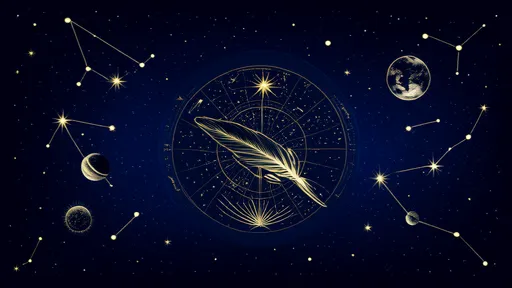
The Milky Way itself, arching majestically across the August firmament, has been envisioned as a river of souls, a path to the afterlife, or a celestial backbone by cultures from the Maya to the Norse. Its hazy band is a composite of countless stars and unresolved light, a visual proof of the vastness beyond our world. Before light pollution obscured this view, the Milky Way was a constant, humbling presence that inspired both reverence and inquiry, driving early astronomers to ponder the nature of the universe.
In the quiet moments of an August night, when the stars seem to pulse with ancient light, one can almost hear the whispers of ancestors who gazed upon these same constellations. They saw not random points of light but stories—a celestial library of myths, warnings, and wisdom. The secrets of the August stars are not encrypted in codes but in the enduring human spirit that finds wonder in the heavens. They remind us that while our understanding of the universe has expanded, the stars remain timeless companions in our quest for meaning, connecting us to the past and guiding us toward the future.
So as you look up this August, remember that you are part of a chain of observers stretching back to the dawn of consciousness. The stars that sparkle overhead have witnessed the rise and fall of empires, the birth of art and science, and the unbroken human desire to reach beyond the earthly realm. Their secrets are not locked away but offered freely to those who take the time to look, listen, and dream.
By /Sep 5, 2025

By /Sep 5, 2025
By /Sep 5, 2025
By /Sep 5, 2025

By /Sep 5, 2025
By /Sep 5, 2025
By /Sep 5, 2025

By /Sep 5, 2025
By /Sep 5, 2025
By /Sep 5, 2025

By /Sep 5, 2025

By /Sep 5, 2025
By /Sep 5, 2025
By /Sep 5, 2025

By /Sep 5, 2025

By /Sep 5, 2025

By /Sep 5, 2025
By /Sep 5, 2025
By /Sep 5, 2025
By /Sep 5, 2025
